

01 / The Exhibition
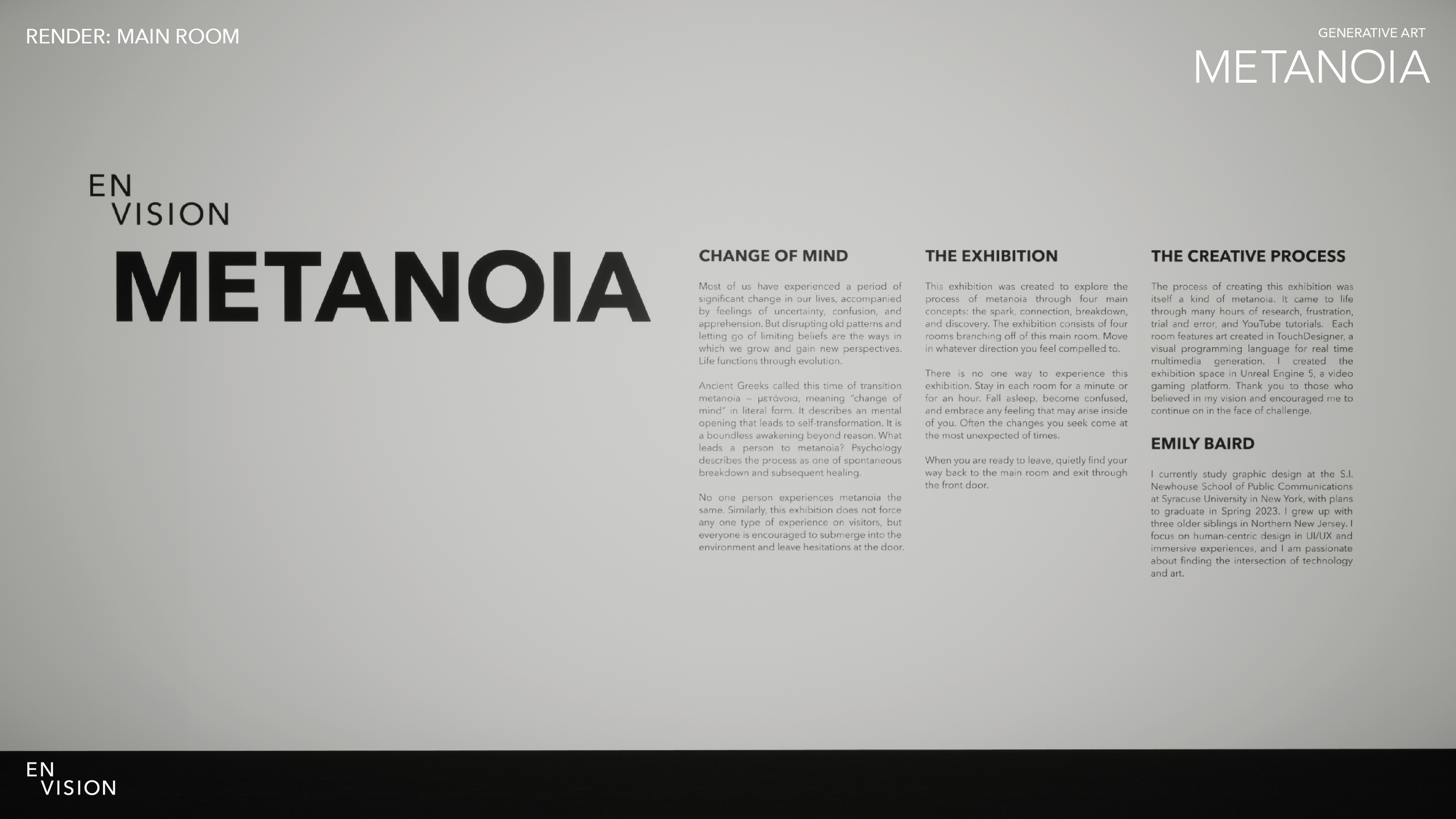
Ancient Greeks called a time of deep personal transition metanoia — μετάνοια, meaning “change of mind.” Most of us have lived through one: a period of uncertainty and confusion that ends in growth. I wanted to see if a space could take people through that arc, using motion and light instead of words.
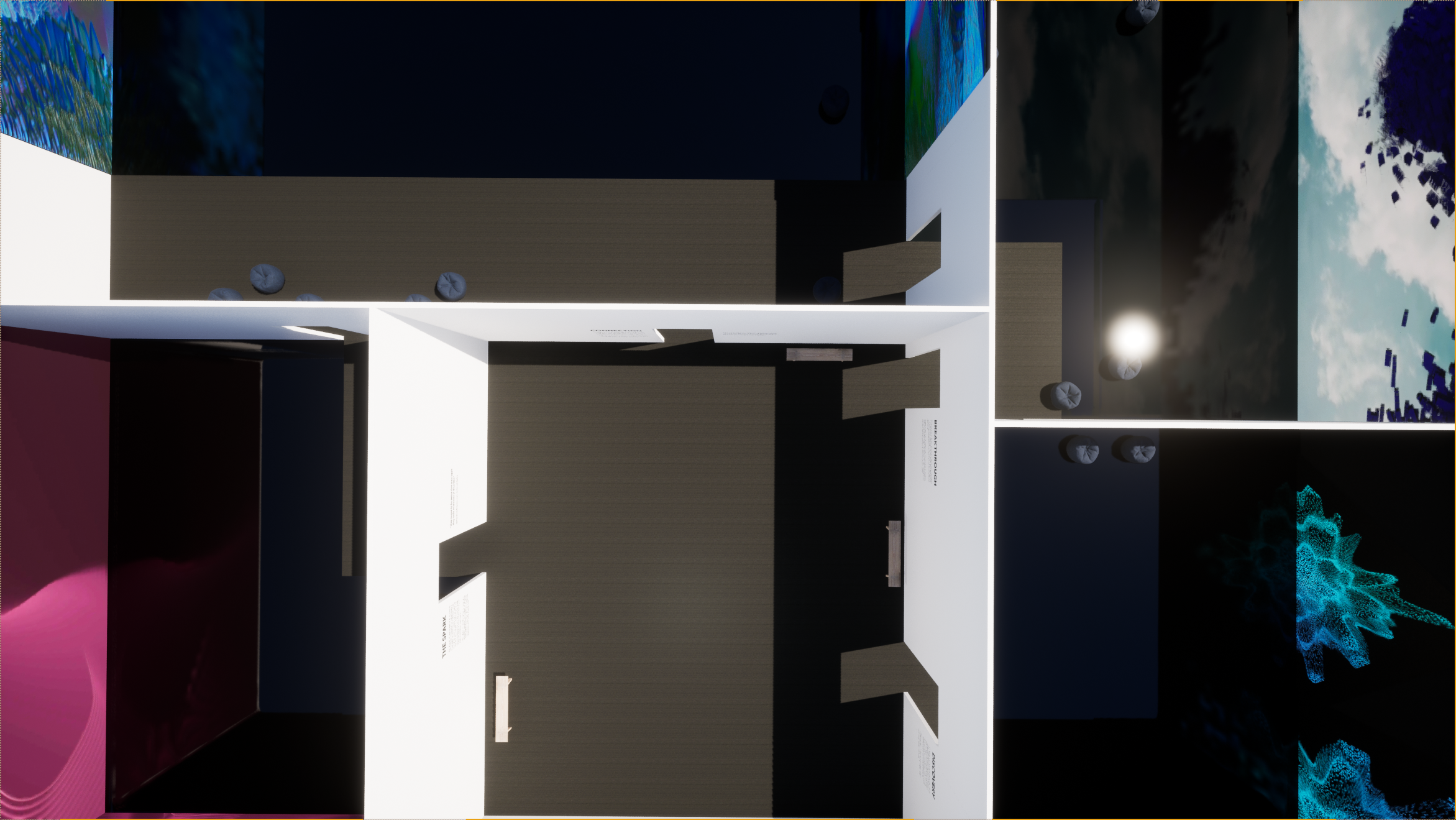
I broke change into four stages and gave each one its own room. Visitors start in a main room that introduces the concept, then move through the spark, breakthrough, connection, and discovery.
The Spark
Change begins with a spark: enigmatic, constantly evolving, and full of possibility. A single bright form pulses, moves, and shifts color at the center of the room.


Breakthrough
Change can feel chaotic and confusing until suddenly everything falls into place. Perlin curl noise creates organic 3D movement that energizes and soothes at the same time.


Connection
We each change on our own, but never alone. Lava-like textures of particles move independently, yet each one affects the movement of all the rest.


Discovery
Transformation opens up new territory to explore. Energy pulls in and pulses out in every direction, lighting up new possibilities and creating beauty from chaos.


Walk-through
02 / Brand Identity
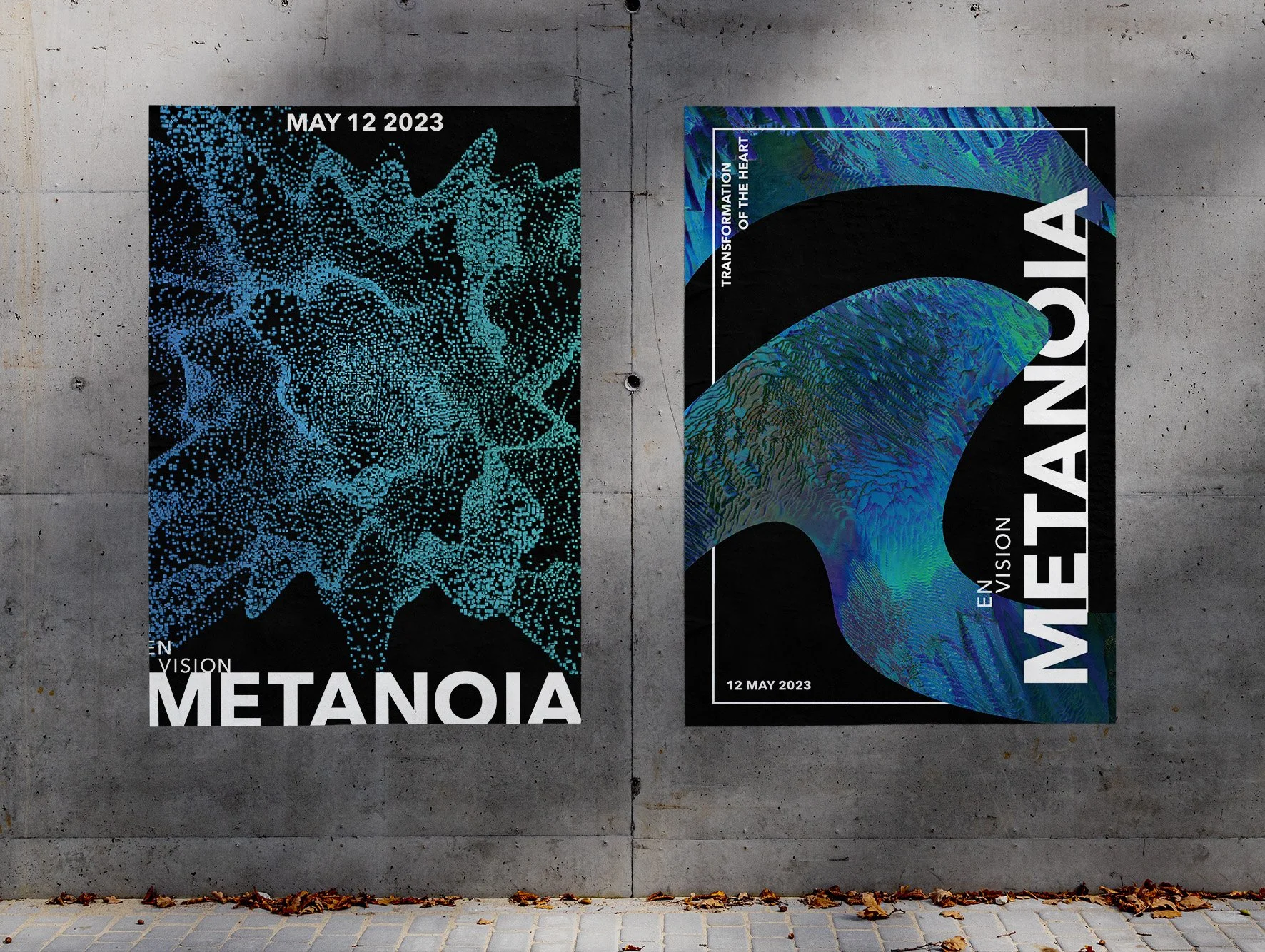
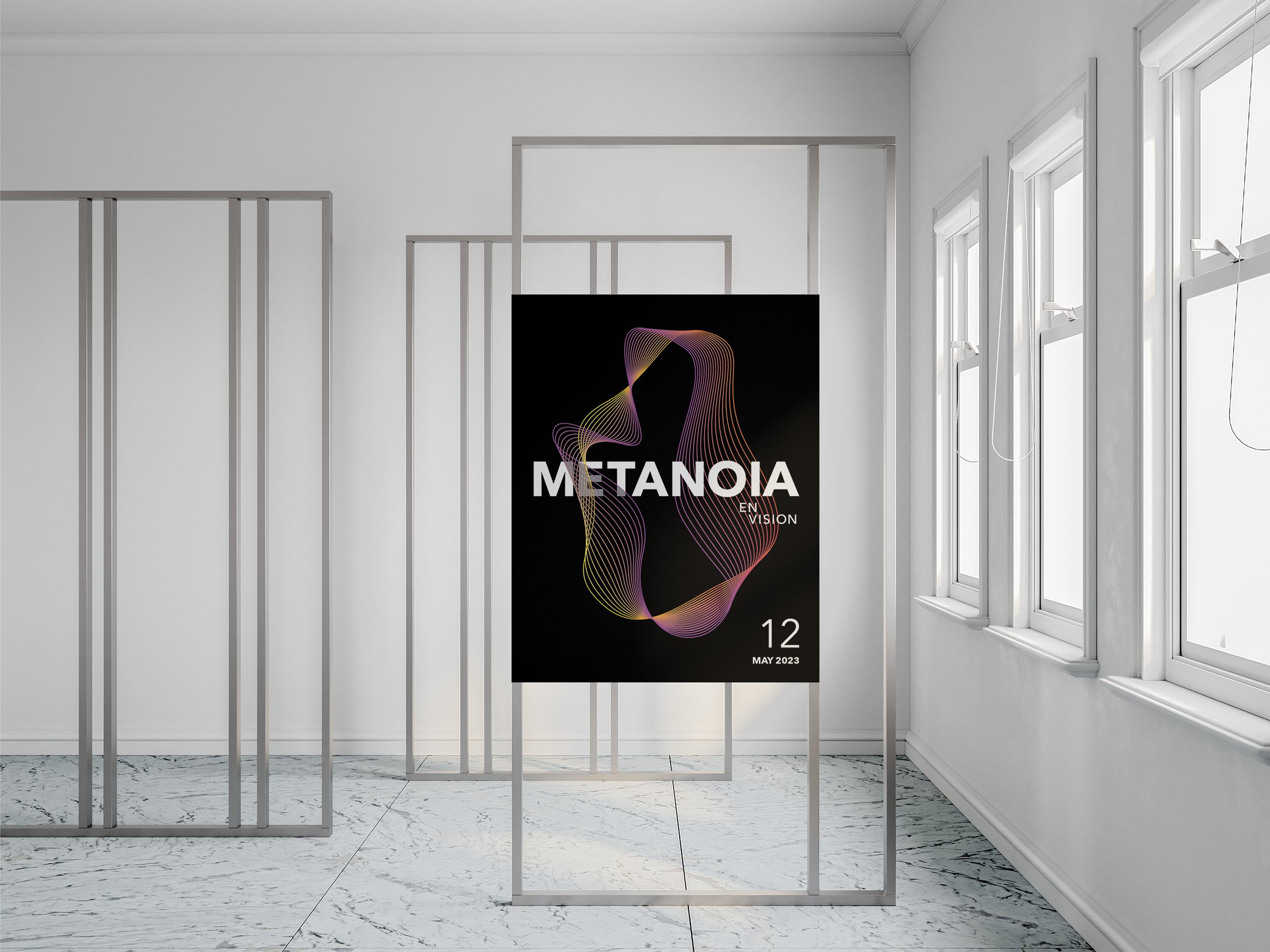
The posters are the exhibition’s public face: how I invited people into an abstract experience before they ever stepped inside. I built them from the generative visuals themselves, so the identity grows directly out of the art, and paired that fluid imagery with a strong, bold uppercase typeface.
03 / Process
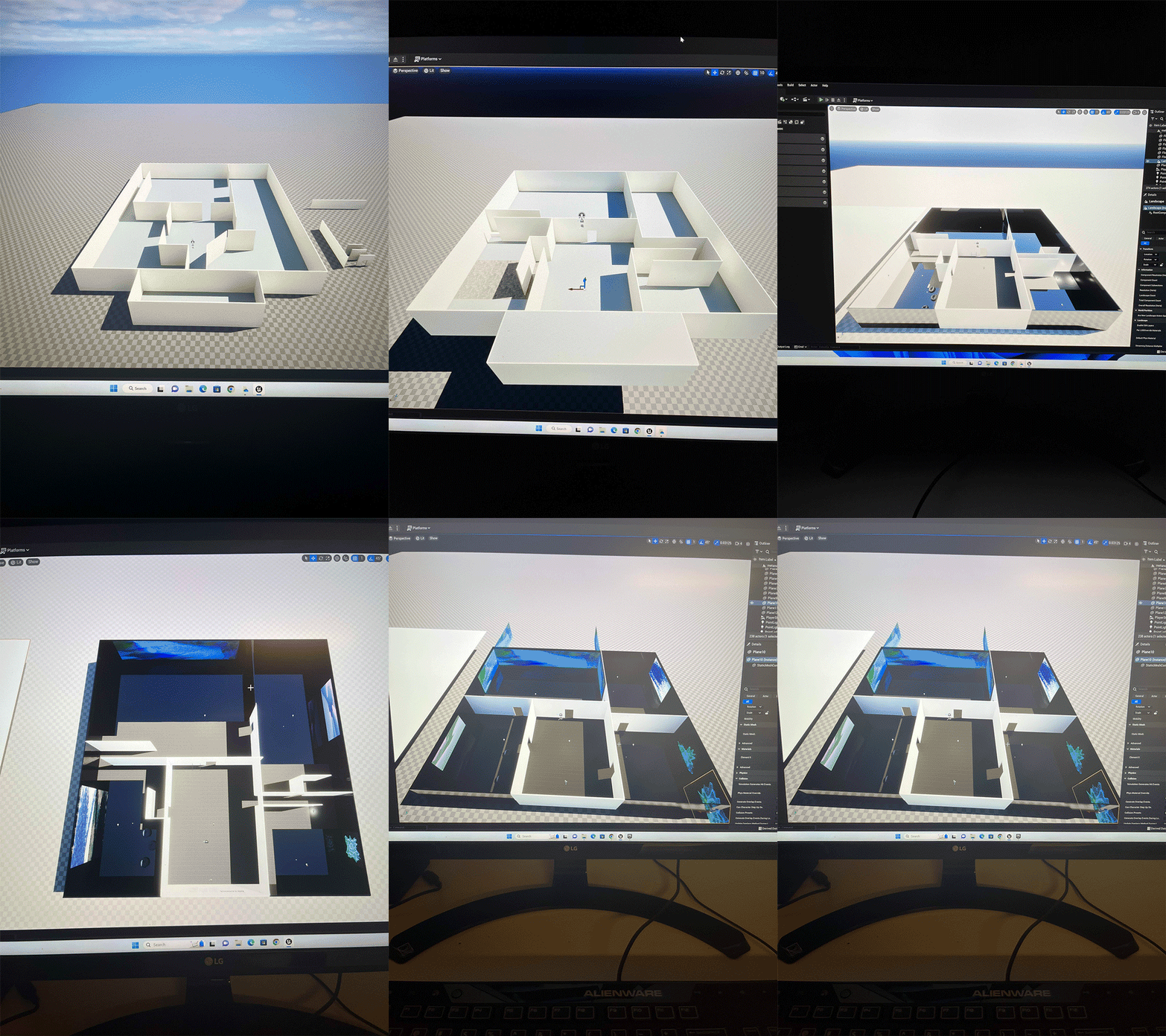
Without a physical space or projection equipment, I built the exhibition virtually in Unreal Engine 5 and created every visual in TouchDesigner, a visual programming language. I had never used either, so I taught myself both through many hours of research, tutorials, and frustration. The process became its own kind of metanoia.

What I learned
I care deeply about how people experience a space, and this project let me focus entirely on that: translating something as subjective and abstract as personal change into sharp, intentional design that visitors could feel, not just see.
04 / Award
-
Gold, Student Interactive & Motion DesignAEJMC Visual & Interactive Media Fest, 2024
“Your adoption and use of the technology is right on point and provides an easy point of access for the audience.”
Judge, AEJMC Visual & Interactive Media Fest